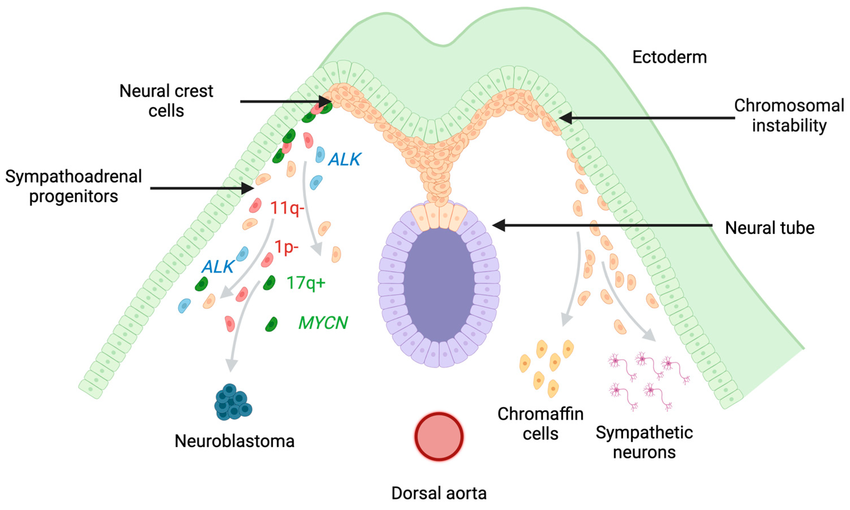
Development of neuroblastoma from the neural crest
Neural crest cells undergo a migra-tion and differentiation process during embryogenesis, giving rise to multiple cell types. Among these are sympathoadrenal progenitor cells, which ultimately differentiate to sympathetic neurons and chromaffin cells. The deregulation of this differentiation process via germline mutations such as the ones on the anaplastic lymphoma kinase (ALK) gene or sporadic genetic aberrations like gain of 17q and loss of 1p and 11q, as well as MYCN amplification and others, can give rise to neuroblast-toma. Created with https://www.biorender.com/ (accessed on 7 April 2024).
Neural Crest Genes: Key to Development, Diversity, Disease
The neural crest stands as one of the most remarkable stem cell populations in vertebrate biology, distinguished by its remarkable plasticity, migratory prowess, and capacity to differentiate into an astonishing array of cell types.


Tagline
Stem Cell Transplant For:Neuroblastoma Pediatric Cancer Treatment Guide
As one of the most common solid tumors in children, neuroblastoma accounts for approximately 7-10% of all pediatric cancers and is responsible for nearly 15% of childhood cancer-related deaths.